 smart
Start with the photo you cannot take
If you photograph a distant subject, a phone with a useful telephoto camera deserves a closer look. If most of your pictures are people across a table, paying for the highest advertised zoom may solve the wrong problem. Write down where your current camera falls short before comparing numbers.
Here is the practical difference: changing the lens, using part of a sensor and enlarging an image can all make a subject fill more of the frame. They do not collect the same information in the same way. Start with the smartphone catalog, then check the camera system of the exact model you are considering.
Optical reach starts with the lens
A telephoto lens gives a narrower view than a phone's main wide camera. On many multi-camera phones, choosing a marked zoom step switches between cameras with different fixed focal lengths. That does not establish continuous optical zoom at every position between those steps. Some phones have a variable optical telephoto lens; check the manufacturer's description rather than assuming all systems work alike.
Equivalent focal length helps describe framing across different camera systems. A larger equivalent millimeter value describes a narrower view; it is not a score for image quality. Likewise, a zoom range can compare the widest and longest available views rather than describe magnification relative to the main camera. Ask what the number uses as its starting point.
A sensor crop is a separate case
A sensor crop uses a smaller area of the image captured through an existing lens. A high-resolution sensor can provide a tighter frame while still producing a useful output size. That does not create another physical telephoto lens, and it does not make every crop equally good in every condition.
Apple's iPhone 14 Pro is a documented example: its launch explanation describes the 2x option as using the central 12 megapixels of the main sensor. Its technical specification separately lists a 3x telephoto camera. This older example explains the mechanism; it is not a recommendation to buy an older phone or a comparison of current camera quality.
When a manufacturer uses terms such as optical-quality or in-sensor zoom, read the accompanying explanation. The label alone does not prove that the phone has an additional lens or that our editors have verified equivalent image quality.
Digital zoom and the numbers on the box
| Specification wording | What to check |
|---|---|
| Telephoto / optical | Which physical lens and focal length? Fixed steps or a variable range? |
| Sensor crop / optical-quality | Which sensor area and output resolution? Read the manufacturer's conditions. |
| Digital / hybrid | How is the image cropped, combined or enlarged? What do relevant samples show? |
| Maximum zoom | Is this an optical capability, a processed limit or a range across cameras? |
Digital enlargement creates a tighter-looking image through cropping and processing rather than a longer optical focal length. Processing can make a result more useful, but an enlarged output should not be treated as proof that every visible detail was captured optically. The maximum slider setting is a feature limit, not a guarantee of a usable photograph.
Use the distinctions below to read a specification sheet. They describe mechanisms, not a ranking of cameras. Light, subject movement, focusing and processing still matter, and this guide contains no controlled image-quality measurements.
Two examples worth reading carefully
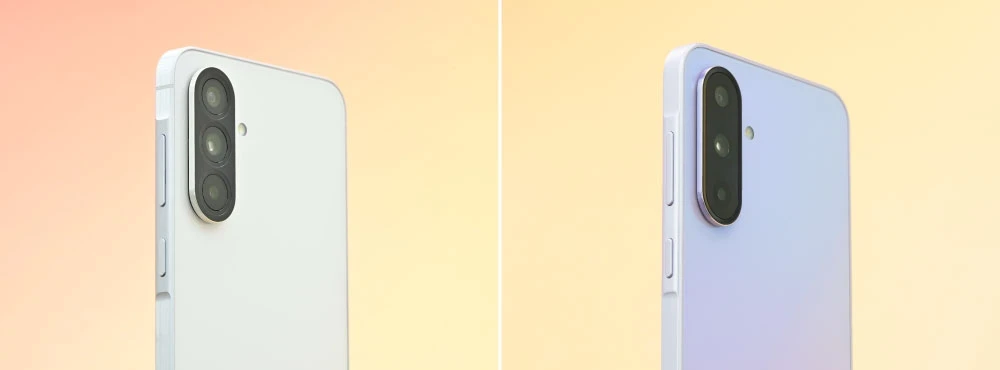
Samsung's US camera support page describes up to 10x digital zoom for both the Galaxy A56 5G and A36 5G. Its launch camera table lists main, ultra-wide and macro rear cameras for these models, rather than a dedicated telephoto. Do not read their 10x label as a 10x optical lens.
The Galaxy A56 model page and Galaxy A36 model page help organize those hardware differences. Neither a higher megapixel count nor an extra camera circle establishes a better distant-subject photo. A macro camera serves a close-up purpose; it is not a telephoto replacement.
Before paying more for zoom, look for full-size examples at the focal length you expect to use. Compare the same scene and lighting, note whether the subject moves, and check whether images came from a manufacturer or a documented independent test. A promotional sample is not our own test result.
Choose the reach you will actually use
Use the smartphone comparator to put shortlisted hardware side by side. Mark an unspecified camera field as a question to resolve, rather than guessing that a missing value means the feature is absent.
Choose a phone with a verified telephoto system if distant framing is a recurring need and suitable sample evidence supports the result you want. Choose a simpler camera setup if your usual photos fit its main and ultra-wide views and its tighter framing meets your needs. The trade-off is worth paying for only when it improves a photograph you actually want to take.